Adhere to the quality concept of "quality first, user first", pursue the core values of product innovation
Home » News » Product News » Are Solid Surface Basins The Best Choice for Your Bathroom?
Are Solid Surface Basins The Best Choice for Your Bathroom?
Views: 0 Author: Site Editor Publish Time: 2026-02-02 Origin: Site
Designing a bathroom requires a delicate balance between aesthetics and functionality. You want a space that looks like a spa retreat but functions like a workhorse. Among the many choices you face, selecting the right sink is crucial. While porcelain and ceramic have been the standard for decades, solid surface basins are rapidly becoming the preferred choice for modern renovations.
But what makes them different? Are they worth the investment? To help you decide, we have compiled the most frequently asked questions about these fixtures, covering everything from the durability solid surface basin models offer to their maintenance requirements.
What exactly is a solid surface basin?
A solid surface basin is made from a composite material, typically a blend of acrylic or polyester resins mixed with bauxite and marble dust. Unlike ceramic, which is coated with a glaze, solid surface material is consistent all the way through—hence the name "solid surface."
This composition allows for incredible design flexibility. Manufacturers like Shenzhen Letu Industrial Co., Ltd, who have over 25 years of experience in the industry, utilize this material to create seamless, non-porous sinks that are resistant to stains and bacteria. Because the material is uniform, it can be sanded, carved, and molded into shapes that natural stone or ceramic simply cannot achieve.
How does the durability compare to ceramic?
When discussing bathroom fixtures, longevity is key. The durability solid surface basin options provide is one of their strongest selling points. Ceramic sinks are hard but brittle; if you drop a heavy perfume bottle or a hairdryer on ceramic, it is likely to crack or shatter. Once ceramic is cracked, it usually needs to be replaced.
Solid surface is different. It has a high impact resistance. While not invincible, it absorbs shock better than ceramic. More importantly, if it does get scratched or chipped, it is repairable. Minor scratches can be buffed out with a scouring pad, and deeper chips can often be filled and sanded down by a professional, restoring the sink to its original condition.
Comparison: Solid Surface vs. Traditional Materials
To give you a clearer picture, here is a breakdown of how solid surface stacks up against other common bathroom materials.
Feature
Solid Surface Basins
Ceramic/Porcelain
Natural Stone
Porosity
Non-porous (Bacteria resistant)
Low (if glazed properly)
Porous (Requires sealing)
Durability
High impact resistance
Brittle (Prone to cracking)
High, but can chip
Repairability
High (Buffable/Fillable)
Low (Difficult to repair)
Low to Medium
Design Flexibility
High (Seamless shapes)
Limited to molds
Limited to carving
Maintenance
Low effort
Low effort
High effort (Sealing)
What are the design benefits of solid surface vanity sinks?
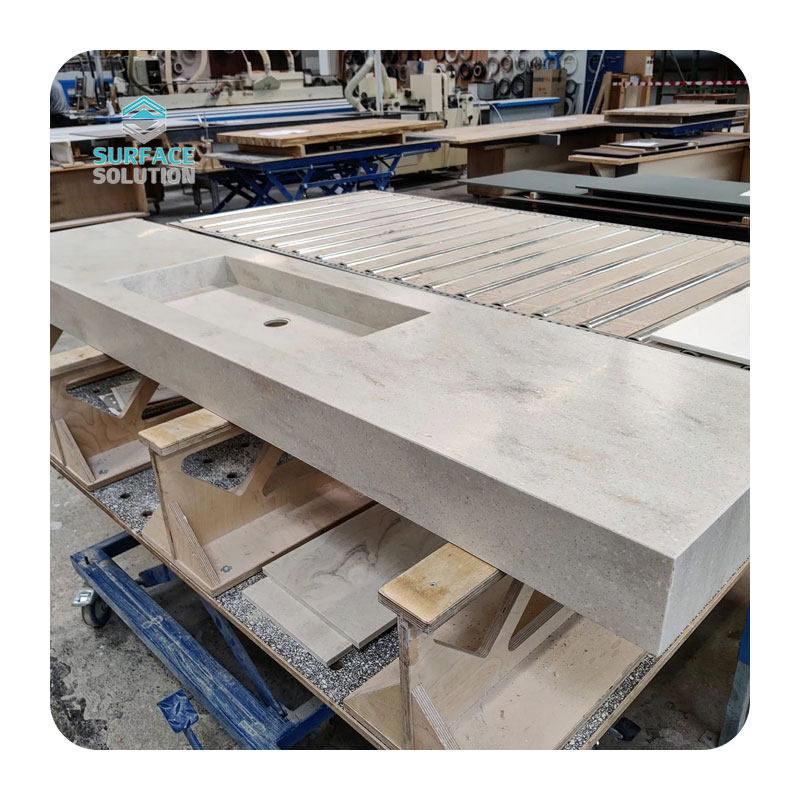
Aesthetics are where these basins truly shine. Because the material can be joined invisibly, solid surface vanity sinks can be integrated directly into the countertop. This means there are no ridges, lips, or caulking lines where dirt and grime can accumulate.
The visual effect is a sleek, continuous flow from the vanity top down into the bowl. This "integrated" look is a hallmark of high-end, minimalist design. Whether you are looking for sharp, architectural lines or soft, organic curves, the molding capabilities of solid surface material make it possible. You can explore various designs and configurations at Surface Solution to see how versatile these basins can be.
Is maintenance difficult?
Contrary to what some might think, these basins are exceptionally easy to maintain. Because they are non-porous, they do not harbor bacteria or mold, making them hygienic for family bathrooms.
Daily cleaning requires nothing more than soapy water or an ammonia-based cleaner. Unlike natural stone, you never need to seal a solid surface basin. If you encounter a stubborn stain—like hair dye or makeup—you can use a mild abrasive cleaner to remove it without damaging the structural integrity of the sink.
Is a solid surface basin right for my project?
If you prioritize durability, hygiene, and modern design, the answer is likely yes. While the upfront cost may be slightly higher than a standard drop-in ceramic sink, the longevity and repairability often result in a better return on investment over the lifespan of the bathroom.
Choosing the right supplier
When selecting your fixtures, quality manufacturing matters. Solid surface basins and solid surface vanity sinks are only as good as the materials used to create them. By opting for reputable manufacturers, you ensure that your bathroom features will remain beautiful and functional for years to come. Whether you are renovating a master bath or updating a powder room, solid surface offers a blend of luxury and practicality that is hard to beat.
Surface Solution is inspired and created by a simple idea that countertop is the place where life’s moment happened. Originate from countertop, but not limit the usage to countertop, surface solution extend the applications of solid surface and unconsciously integrate the solid surface into daily life.
We use cookies to enable all functionalities for best performance during your visit and to improve our services by giving us some insight into how the website is being used. Continued use of our website without having changed your browser settings confirms your acceptance of these cookies. For details please see our privacy policy.

 English
 العربية
 Français
 Português
 Deutsch
 日本語
日本語 한국어
한국어 Nederlands
 Tiếng Việt
 ไทย
ไทย Polski
 ພາສາລາວ
 ភាសាខ្មែរ
 Bahasa Melayu
 ဗမာစာ
ဗမာစာ Filipino
 Bahasa Indonesia
 magyar
 Română
 Čeština
 Монгол
 қазақ
қазақ Српски
 فارسی
فارسی Kiswahili
 Slovenčina
 Slovenščina
 Norsk
Norsk Svenska
 українська
 Ελληνικά
 Suomi
Suomi Հայերեն
 עברית
עברית Dansk
Dansk Shqip
Shqip Hrvatski
 Gaeilge
 Eesti keel
 latviešu
 Azərbaycan dili
 Беларуская мова
 Български
 ქართული
 ʻŌlelo Hawaiʻi
 Wikang Tagalog