Choosing the perfect countertop is often the hardest part of a kitchen or bathroom remodel. You want something that looks stunning, can handle the chaos of daily life, and doesn't completely drain your bank account. While granite and quartz often steal the spotlight in design magazines, the solid surface countertop remains a top contender for homeowners who value versatility and hygiene.
If you are looking for a material that offers seamless integration, repairability, and endless design possibilities, solid surface might just be your best bet. It sits comfortably in the middle of the price spectrum—more affordable than high-end natural stone but offering significantly higher performance and aesthetics than laminate.
This guide explores everything you need to know about solid surface materials, from how they are made to how they compare with other popular options. Whether you are considering industry leaders or innovative options like Letu Surface, understanding the pros and cons will help you make an informed decision for your home.
What Exactly is a Solid Surface Countertop?
Solid surface is a man-made material composed of mineral dust (mostly marble dust or bauxite) mixed with a variety of plastic resins and pigments. It was originally created over 50 years ago to mimic the look of natural stone while eliminating some of the drawbacks, such as porosity.
The "solid" in the name refers to the fact that the material is consistent all the way through. If you cut a piece of granite, the pattern changes. If you cut a piece of laminate, you hit particle board. But with a solid surface countertop, the color and pattern run through the entire thickness of the slab. This homogeneity is the secret behind its durability and its ability to be repaired.
Typically, these countertops are made with either acrylic or polyester resins:
· Acrylic-based: These are highly durable, UV resistant, and easier to fabricate. They are ideal for complex shapes (thermoforming) and generally have a matte finish.
· Polyester-based: These tend to have a glossier finish and can achieve more vibrant colors, though they can be slightly more brittle than acrylics.
The Distinct Advantages of Solid Surface
There is a reason this material has remained popular for decades. It solves specific problems that other materials cannot.
Seamless Hygiene
The biggest selling point for many homeowners is the "seamless" installation. When professional installers join two pieces of solid surface material, they use a color-matched adhesive and sand it down until the seam is virtually invisible to the naked eye.
This isn't just an aesthetic perk; it’s a hygiene feature. Without visible seams or grout lines, there are no cracks for crumbs, water, or bacteria to hide in. Furthermore, the material is non-porous. Unlike granite or marble, which require regular sealing to prevent bacterial growth and staining, solid surface is waterproof and sanitary right out of the box. This makes it a favorite for hospitals and commercial kitchens, as well as busy family homes.
Repairability
Accidents happen. A heavy cast-iron skillet might slip, or a knife might slide off a cutting board. On a laminate counter, a deep scratch is permanent. On stone, a chip requires a specialist to fill.
With a solid surface countertop, minor damage is easily fixed. Because the color goes all the way through, scratches and burns can often be sanded out using fine-grit sandpaper and a scouring pad. For more significant damage, a professional can cut out the damaged section and replace it with a new piece of material, blending the seams so perfectly that the repair becomes invisible.
Design Flexibility
If you have a uniquely shaped kitchen or want a curved island, solid surface is unmatched. Through a process called thermoforming, the material can be heated and bent into three-dimensional shapes. This allows for integrated sinks (where the sink is fused directly to the countertop without caulking), coved backsplashes, and fluid curves that stone simply cannot achieve.
Brands like Letu Surface utilize this flexibility to offer a wide range of aesthetic options, from solid colors to complex patterns that mimic the random veining of natural marble or the aggregate look of quartz.
The Potential Drawbacks
No material is perfect, and solid surface does have limitations that you need to be aware of before purchasing.
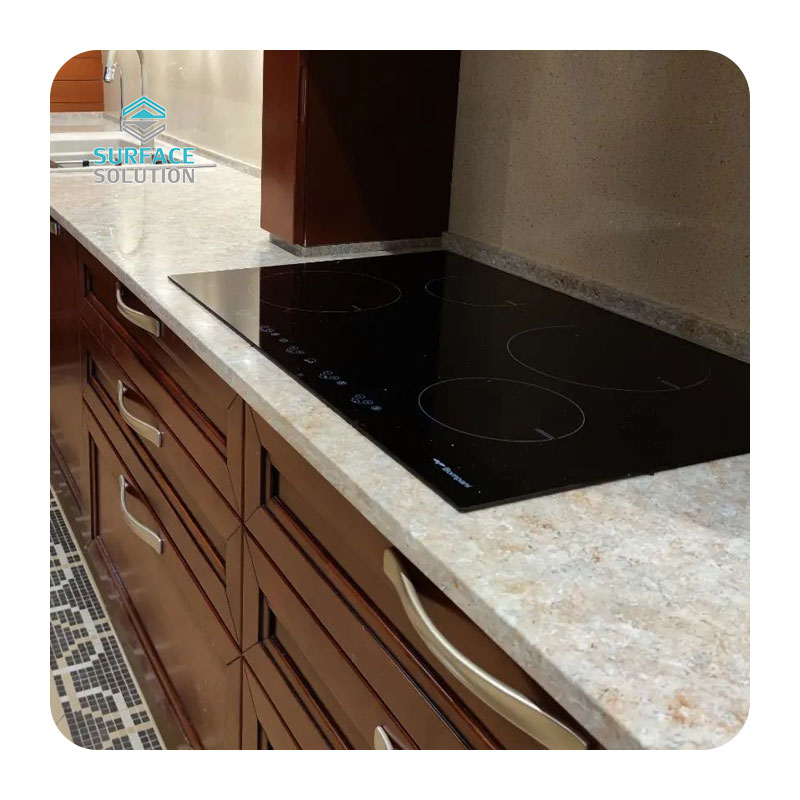
Heat Sensitivity
This is the Achilles' heel of the material. Because it is made with plastic resins, a solid surface countertop can be damaged by high heat. Placing a hot pot directly from the stove onto the surface can cause scorching, discoloration, or even cracking. While some burns can be sanded out, it is generally safer to use trivets or hot pads at all times.
Susceptibility to Scratches
While solid surface is tough, it is softer than natural stone or engineered quartz. It can be scratched by knives or rough ceramics dragged across the surface. Darker colors tend to show scratches and dust more readily than lighter colors or patterns. However, as mentioned earlier, the saving grace is that these scratches can be buffed out.
Comparing the Contenders
To help visualize where solid surface fits in the market, here is a comparison against other common countertop materials.
Feature | Solid Surface | Granite | Quartz | Laminate |
Porosity | Non-porous (No sealing needed) | Porous (Needs sealing) | Non-porous | Non-porous |
Heat Resistance | Low to Moderate | High | High | Low |
Seamlessness | Excellent (Invisible seams) | Visible seams | Visible seams | Visible seams |
Repairability | High (Sandable) | Low (Hard to fix) | Low (Hard to fix) | None (Replace only) |
Cost | Mid-Range | Mid to High | High | Low |
Maintenance | Easy (Soap & water) | Moderate (Sealing) | Easy | Easy |
Maintenance and Care for Longevity
Keeping a solid surface countertop looking brand new is relatively straightforward. Since you don't need to worry about sealants, your daily routine involves simple cleaning.
For everyday cleaning, warm soapy water or an ammonia-based cleaner is sufficient. Avoid window cleaners, as they can leave a waxy build-up over time, and stay away from strong chemicals like oven cleaners or paint removers, which can damage the resin.
To prevent water marks, it is good practice to wipe the surface dry after cleaning. If you opt for a sink integrated into your countertop—a popular choice with Letu Surface designs—you can run water and bleach through it occasionally to keep it pristine, though you should consult the manufacturer's specific care guide first.
If you encounter a stubborn stain or a fine scratch, you can use a mild abrasive cleaner and a scouring pad. Rub in a circular motion to buff out the imperfection, then rinse and dry. This renewability is something you simply don't get with stone.
Is It Worth the Investment?
When budgeting for a renovation, solid surface usually lands in the middle tier. It is significantly more expensive than laminate but often cheaper than premium quartz or exotic granite.
The value comes from its longevity. A laminate countertop might peel or crack after 10 years, requiring replacement. A solid surface countertop, however, can be refinished after a decade of use to look brand new again. This creates a lifecycle cost that is quite attractive for homeowners planning to stay in their house for the long term.
Furthermore, the aesthetic options have expanded greatly. Modern manufacturing techniques allow brands to create depth and translucency that rivals real stone. Whether you want a minimalist, pure white aesthetic or the dramatic look of dark stone, there is likely a solid surface option that fits your vision.
Creating Your Dream Kitchen
There is no single "best" countertop material, but solid surface offers a compelling balance of function and form. It provides the luxury look of stone with a softer, warmer touch and a hygienic profile that is hard to beat.
If you hate the idea of sealing granite every year, or if you want a kitchen island with seamless curves and an integrated sink, this is the material for you. Consider exploring the ranges offered by manufacturers like Letu Surface to see the variety of textures and colors available today. By weighing the pros and cons against your lifestyle—specifically how you cook and clean—you can decide if this versatile material is the foundation your new kitchen needs.
solid surface countertop
modern countertops
countertop

 English
 العربية
 Français
 Português
 Deutsch
 日本語
日本語 한국어
한국어 Nederlands
 Tiếng Việt
 ไทย
ไทย Polski
 ພາສາລາວ
 ភាសាខ្មែរ
 Bahasa Melayu
 ဗမာစာ
ဗမာစာ Filipino
 Bahasa Indonesia
 magyar
 Română
 Čeština
 Монгол
 қазақ
қазақ Српски
 فارسی
فارسی Kiswahili
 Slovenčina
 Slovenščina
 Norsk
Norsk Svenska
 українська
 Ελληνικά
 Suomi
Suomi Հայերեն
 עברית
עברית Dansk
Dansk Shqip
Shqip Hrvatski
 Gaeilge
 Eesti keel
 latviešu
 Azərbaycan dili
 Беларуская мова
 Български
 ქართული
 ʻŌlelo Hawaiʻi
 Wikang Tagalog


