Adhere to the quality concept of "quality first, user first", pursue the core values of product innovation
Home » News » Product News » Is Artificial Stone The Best Choice for Your Kitchen?
Is Artificial Stone The Best Choice for Your Kitchen?
Views: 0 Author: Site Editor Publish Time: 2026-02-02 Origin: Site
Choosing the right surface for your home renovation is a massive decision. You want something that looks elegant and luxurious, but you also need it to stand up to the daily abuse of hot pans, spilled wine, and dropped cutlery. While natural stone has been the traditional go-to for luxury, artificial stone has rapidly become the preferred choice for modern homeowners and designers.
But what exactly is it, and does it live up to the hype? We answer your most pressing questions about this versatile material below.
What is artificial stone?
Artificial stone, often referred to as solid surface, is a man-made material composed of natural minerals and high-performance acrylic or polyester resins. Unlike natural stone, which is mined from the earth in slabs, artificial stone is engineered to provide consistency in color and texture.
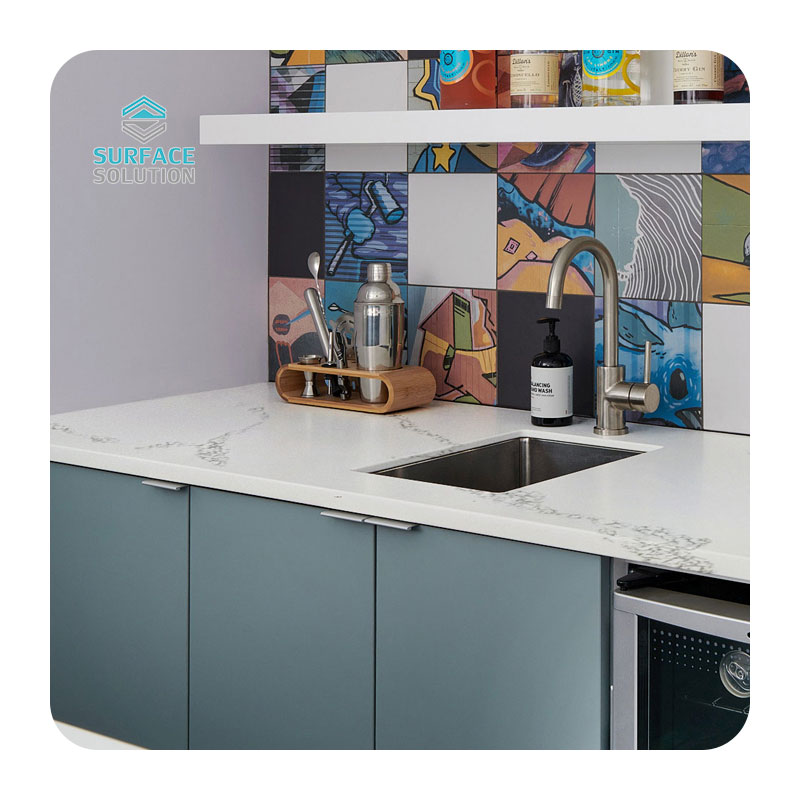
This manufacturing process allows for the creation of artificial marble, which mimics the beautiful veining and aesthetics of natural marble but eliminates many of its weaknesses. Because it is manufactured, it can be produced in a limitless range of colors and patterns, from solid brights to complex, granite-like textures.
How does an artificial marble countertop compare to natural stone?
The biggest debate usually happens when comparing an artificial marble countertop against real stone like granite or marble. While natural stone offers a unique, organic look, it requires significant maintenance.
Here is a quick comparison to help you visualize the differences:
Feature
Artificial Marble / Solid Surface
Natural Stone (Granite/Marble)
Porosity
Non-porous (bacteria and stain resistant)
Porous (absorbs liquids and bacteria)
Maintenance
Low maintenance; easy to clean with soapy water
High maintenance; requires regular sealing
Repairability
Repairable; scratches can be sanded out
Difficult to repair; cracks are often permanent
Design
Seamless joints; can be thermoformed into curves
Visible seams; rigid and cannot be bent
Consistency
Uniform color and pattern throughout
Variations in color and veining are uncontrolled
Why is artificial stone considered more hygienic?
One of the primary selling points of artificial stone is its non-porous nature. Natural stone is filled with microscopic pores that can trap food particles, moisture, and bacteria. Over time, this can lead to staining and unsanitary conditions if the surface isn't sealed perfectly.
In contrast, high-quality solid surfaces are completely non-porous. This means moisture cannot penetrate the surface, making it incredibly resistant to mold, mildew, and bacteria growth. For families with young children or commercial spaces like hospitals and restaurants, this hygiene factor makes artificial stone the superior option.
Can damaged surfaces be repaired?
Accidents happen. A heavy pot might slip, or a knife might scratch the surface. If you chip a slab of natural granite, the repair is often expensive and visible.
However, artificial marble is renewable. Because the color and pattern run all the way through the material, minor scratches and burns can often be sanded away by a professional, returning the surface to its original condition. This longevity is why many manufacturers offer extended warranties.
Where can I find high-quality artificial stone?
Not all solid surfaces are created equal. The quality depends heavily on the manufacturing process and the ratio of resin to mineral filler.
For premium solutions, Shenzhen Letu Industrial Co., Ltd is a leading manufacturer with over 25 years of experience in the industry. Operating under the brand "Surface Solution," they offer a vast range of modified acrylic and pure acrylic solid surfaces.
With over 300 color options available, they provide materials that are stain-resistant, repairable, and eco-friendly. Whether you are looking for a sleek, modern look or a classic aesthetic, their expertise ensures you get a product that balances beauty with practical durability.
Is it time to switch?
If you are looking for a material that offers the elegance of stone without the headache of maintenance, artificial stone is the clear winner. It provides a seamless, hygienic, and durable surface that fits perfectly into the busy lifestyle of a modern home.
Surface Solution is inspired and created by a simple idea that countertop is the place where life’s moment happened. Originate from countertop, but not limit the usage to countertop, surface solution extend the applications of solid surface and unconsciously integrate the solid surface into daily life.
We use cookies to enable all functionalities for best performance during your visit and to improve our services by giving us some insight into how the website is being used. Continued use of our website without having changed your browser settings confirms your acceptance of these cookies. For details please see our privacy policy.

 English
 العربية
 Français
 Português
 Deutsch
 日本語
日本語 한국어
한국어 Nederlands
 Tiếng Việt
 ไทย
ไทย Polski
 ພາສາລາວ
 ភាសាខ្មែរ
 Bahasa Melayu
 ဗမာစာ
ဗမာစာ Filipino
 Bahasa Indonesia
 magyar
 Română
 Čeština
 Монгол
 қазақ
қазақ Српски
 فارسی
فارسی Kiswahili
 Slovenčina
 Slovenščina
 Norsk
Norsk Svenska
 українська
 Ελληνικά
 Suomi
Suomi Հայերեն
 עברית
עברית Dansk
Dansk Shqip
Shqip Hrvatski
 Gaeilge
 Eesti keel
 latviešu
 Azərbaycan dili
 Беларуская мова
 Български
 ქართული
 ʻŌlelo Hawaiʻi
 Wikang Tagalog