Renovating a kitchen, designing a commercial space, or upgrading a bathroom brings up a distinct challenge: choosing the right materials. You want something that looks elegant like stone but lacks the high maintenance and porous nature of marble. You need something durable, yet repairable. This is where solid surface materials shine.
While you may have heard the term tossed around by architects or seen it in home improvement stores, many people are still unsure about what this material actually is. Is it plastic? Is it stone? How does it hold up against daily wear and tear?
If you are looking for a material that bridges the gap between the high cost of natural stone and the practicality of modern engineering, this guide is for you. We will answer the most common questions regarding composition, applications, and benefits, helping you decide if this is the right choice for your next project.
What exactly is solid surface?
Solid surface is a man-made, synthetic material composed of a specific blend of natural minerals and high-performance resins. While recipes vary slightly by manufacturer, the standard composition is roughly 33% binding resins (acrylic or polyester) and 66% minerals (usually bauxite derivative known as Alumina Trihydrate or ATH).
The "solid" in the name is quite literal. Unlike laminate, which is a thin layer glued to a particleboard core, solid surface is homogenous. This means the material is consistent from top to bottom. If you were to cut a solid surface countertop in half, you would see the same color and pattern all the way through. This unique construction is what allows it to be sanded, repaired, and renewed—a feature that laminate or plated materials simply cannot offer.
What are the different types of solid surface materials?
Not all solid surfaces are created equal. Depending on your budget and where you plan to install the material, you will generally choose between two main categories: 100% Acrylic and Modified Acrylic (Polyester blends).
Here is a breakdown of how they differ:
Feature | 100% Pure Acrylic Solid Surface | Modified Acrylic (Polyester Blend) |
Composition | Made entirely of acrylic resin and minerals. | A mix of acrylic and polyester resins with minerals. |
Thermoforming | Highly thermoformable. Can be heated and bent into tight curves and complex 3D shapes. | Less flexible. Can be bent slightly but not into complex shapes. |
Durability | Higher resistance to impact and UV light. Less likely to fade over time. | Harder surface, which can sometimes make it more brittle and prone to chipping. |
Appearance | rich visual depth and a "warmer" feel to the touch. | Can achieve very high-gloss finishes and vibrant, translucent colors. |
Cost | Generally more expensive due to the higher quality resin. | Usually more affordable and budget-friendly. |
Where is solid surface mostly used?
Because of its versatility, you will find this material in residential, commercial, and even medical settings.
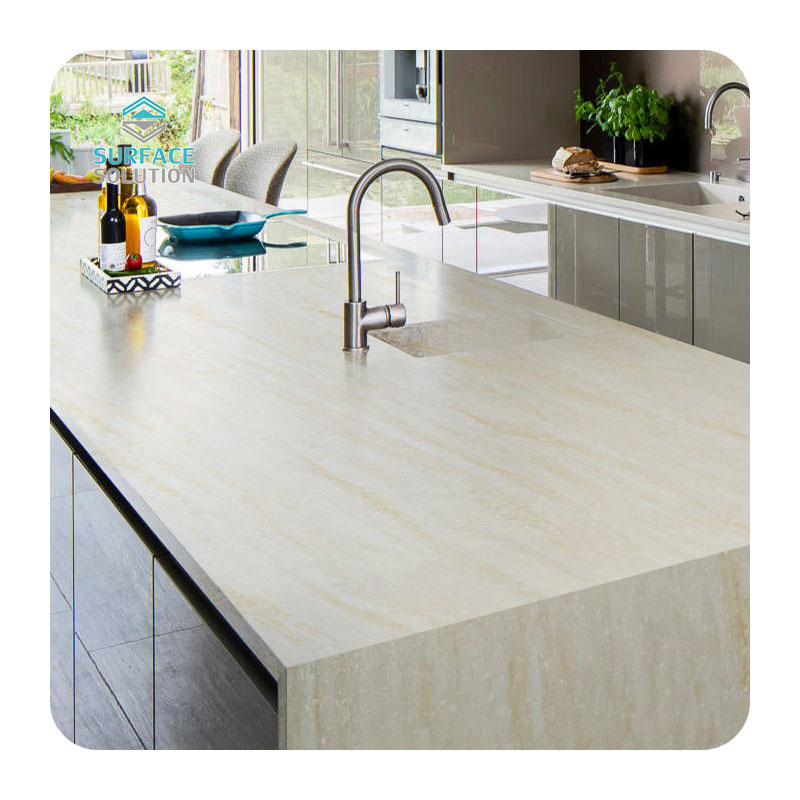
Solid Surface Worktops
In residential kitchens, solid surface worktops are a primary competitor to quartz and granite. The seamless nature of the material means two pieces can be joined together with a color-matched adhesive, making the seam virtually invisible to the naked eye. This allows for long, flowing island counters or L-shaped runs that look like a single slab of stone.
Solid Surface Table Top Applications
In the commercial sector, durability is key. Restaurants, food courts, and corporate offices frequently utilize a solid surface table top for communal areas. Because the material is non-porous, it does not harbor bacteria, mold, or mildew. For a high-traffic cafe, being able to quickly wipe down a table without worrying about coffee stains penetrating the surface is a massive operational advantage.
Bathroom Vanities and Cladding
The material's ability to be thermoformed (heated and bent) allows manufacturers to create integrated sinks. This means the sink bowl and the countertop are fused seamlessly, eliminating the rim where dirt and grime usually collect. It creates a sleek, modern look that is incredibly easy to keep sterile.
How does solid surface compare to natural stone?
This is perhaps the most frequent question homeowners ask. Why choose a synthetic material over real granite or marble?
Natural stone is porous. If you spill red wine on unsealed marble, it can seep into the stone and stain it permanently. Stone also requires regular sealing to maintain its hygiene and appearance.
Solid surface requires no sealing—ever. It is chemically non-reactive and hypoallergenic. Furthermore, natural stone is rigid. You cannot curve granite without expensive machining (and even then, it's limited). Solid surface can be heated and molded into organic, flowing shapes, allowing for creative designs that stone simply cannot achieve.
Who manufactures these materials?
The industry has grown significantly since the material was first invented in the 1960s. Today, there are specialized manufacturers producing high-quality sheets in thousands of colors and patterns.
For example, Shenzhen Letu Industrial Co., Ltd is a prominent player in this space. With over 25 years of experience, they specialize in both modified and pure acrylic solid surfaces. They offer a diverse range of aesthetic options, from their "Artificial Marble Series" to "Solid Color Series," catering to custom fabrications for bespoke kitchens and commercial projects. Manufacturers like Letu focus on the adaptability of the material, ensuring it meets strict quality standards for hardness and stain resistance.
Can solid surface be repaired?
Yes, and this is its superpower. If you scratch a laminate counter, the damage is permanent. If you crack a granite slab, the repair is often unsightly and expensive.
Because solid surface is homogenous (the same material all the way through), minor damage can be easily fixed.
· Minor Scratches: Can be buffed out using a mild abrasive pad or fine-grit sandpaper.
· Deep Cuts or Burns: A professional fabricator can cut out the damaged section and glue in a matching piece of material. Once sanded and polished, the patch becomes invisible.
This renewability means that a solid surface installation can look brand new even after 10 or 20 years of use, which contributes to its long-term value.
Is it heat resistant?
Solid surface is heat resistant, but it is not heat proof. It can withstand boiling water and temperatures up to a certain point (usually around 100°C or 212°F), but placing a hot pot directly from the stove onto the surface can cause scorching or cracking due to thermal shock.
It is always recommended to use trivets or hot pads. However, unlike other materials, if you do accidentally scorch the surface, the burn mark can often be sanded away.
How do I maintain solid surface worktops?
Maintenance is remarkably simple, which appeals to busy families and business owners alike.
1. Daily Cleaning: Use warm soapy water or an ammonia-based cleaner (like window cleaner). Dry with a microfiber cloth to prevent water marks.
2. Stains: For tougher stains, a mild abrasive cleaner (like Soft Scrub) can be used with a circular motion.
3. Prevention: Do not use strong acidic drain cleaners or paint removers on the surface. While the material is durable, harsh chemicals can cause whitening or surface damage if left too long.
How does the cost compare to other materials?
To give you a better idea of where solid surface fits in the market, here is a comparison table regarding pricing and features:
Material | Cost | Maintenance Level | Seams | Repairable? |
Laminate | Low | Low | Visible | No |
Solid Surface | Mid-Range | Low | Invisible | Yes |
Quartz | Mid to High | Low | Visible | Difficult |
Granite | High | High (Needs Sealing) | Visible | Difficult |
Marble | Very High | High (Needs Sealing) | Visible | Difficult |
As you can see, solid surface occupies a "sweet spot" in the market. It offers the luxury aesthetic of stone without the high maintenance, and it offers the affordability of a synthetic without looking "cheap" or having visible seams.
What are the design possibilities?
Because the color goes all the way through, the design potential is limitless. You can rout drainage grooves directly into the countertop next to the sink. You can inlay different colors of solid surface to create logos, stripes, or custom patterns.
Backlighting is another trending application. Certain thinner or lighter-colored solid surface sheets are translucent. When backlit with LEDs, they glow, creating a dramatic ambiance for bars, reception desks, or feature walls.
Summary
Solid surface is more than just a plastic alternative to stone. It is a sophisticated, engineering marvel that solves the hygiene and maintenance issues inherent in natural materials. Whether you are installing solid surface worktops in a family home or specifying a solid surface table top for a busy airport lounge, the material offers a unique blend of durability, hygiene, and style.
If you are ready to explore the vast color options and fabrication possibilities, visiting a specialized manufacturer is your next step. Companies like Shenzhen Letu Industrial Co., Ltd provide the raw sheets and fabrication expertise to turn your design concepts into reality.
When you weigh the benefits—invisible seams, repairability, and non-porous hygiene—it becomes clear why solid surface remains a top choice for modern design.
solid surface
solid surface worktops
solid surface table top

 English
 العربية
 Français
 Português
 Deutsch
 日本語
日本語 한국어
한국어 Nederlands
 Tiếng Việt
 ไทย
ไทย Polski
 ພາສາລາວ
 ភាសាខ្មែរ
 Bahasa Melayu
 ဗမာစာ
ဗမာစာ Filipino
 Bahasa Indonesia
 magyar
 Română
 Čeština
 Монгол
 қазақ
қазақ Српски
 فارسی
فارسی Kiswahili
 Slovenčina
 Slovenščina
 Norsk
Norsk Svenska
 українська
 Ελληνικά
 Suomi
Suomi Հայերեն
 עברית
עברית Dansk
Dansk Shqip
Shqip Hrvatski
 Gaeilge
 Eesti keel
 latviešu
 Azərbaycan dili
 Беларуская мова
 Български
 ქართული
 ʻŌlelo Hawaiʻi
 Wikang Tagalog


